Emergency Water Extraction in Milpitas, CA
Standing water keeps moving into baseboards, drywall and subfloor until it is pulled out. The extraction crew removes it with truck-mounted or portable units, then the drying team takes over.
(888) 774-9605Get Milpitas water extraction started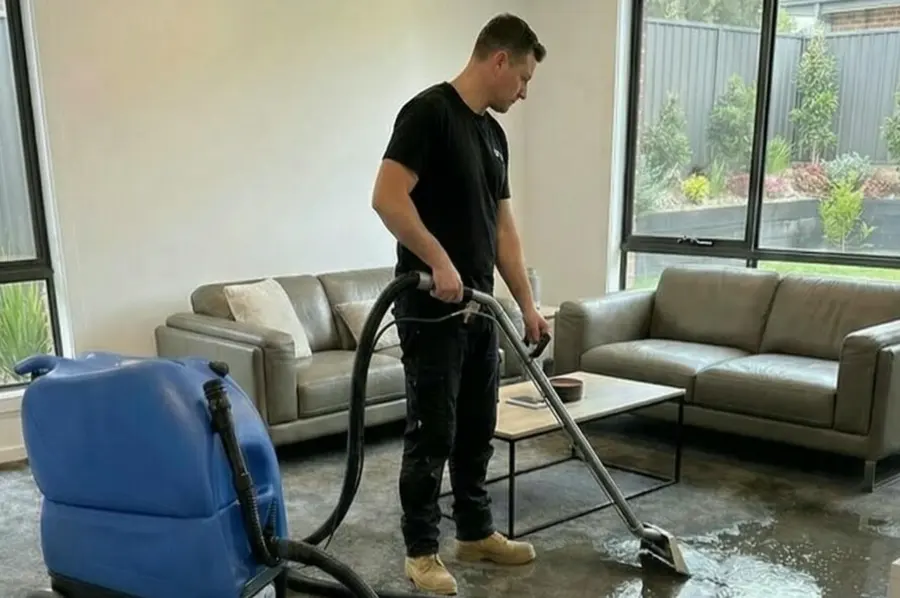
First steps for emergency water extraction in Milpitas
- 1Stop the source
Close the main shutoff or the fixture valve if it is safe to reach.
- 2Cut power to wet rooms
Switch off breakers for wet areas, only if the panel is dry.
- 3Stay out of deep water
Keep people and pets away from water near outlets and cords.
- 4Photograph first
Take wide and close photos before moving anything.
- 5Lift what you can
Move rugs, cords and small furniture off the wet floor, then call.
What does emergency water extraction cost in Milpitas, CA?
In Milpitas, CA, emergency water extraction and the drying that follows typically run $400 to $9,000 or more, depending on the water category, the square footage that got wet, the material class and how fast extraction started.
| Loss size | Typical range | What usually drives it |
|---|---|---|
| One room, clean water | $400 to $1,500 | Category 1, caught early, carpet and pad saved |
| Several rooms | $1,500 to $4,000 | Hallway and bedrooms, some pad removal, LGR dehumidifiers |
| Whole floor or Category 3 | $4,000 to $9,000+ | Sewage or outside water, material removal, full structural drying |
Ranges only, never a quote. The category of water, the square footage, the material class and how fast drying started move the number most. The water damage cost calculator gives a closer planning range.
How emergency water extraction is handled in Milpitas
- 1
Assess
The walkthrough finds the source, the category of water and every wet room.
- 2
Extract
The extraction crew pulls standing water with truck-mounted or portable units.
- 3
Set drying
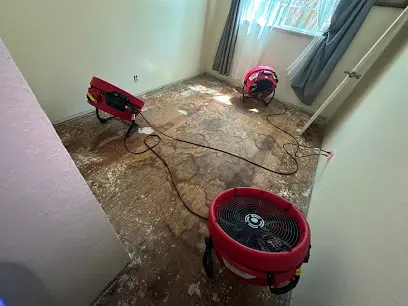
Air movers and LGR dehumidifiers go in, sized to each room.
- 4
Verify
Readings are logged daily until wet materials match a dry reference.
Extraction is the step that decides how long everything else takes. A gallon of water left in a carpet pad or a wall plate has to be evaporated later by air movers and dehumidifiers, which is slow. Pulled out as liquid, it is gone in minutes. That is why the extraction crew goes first on every Milpitas water loss, before a single fan is plugged in.
How water extraction works in Milpitas homes
Single-story ranch homes in Sunnyhills and the older central tracts usually have a driveway close to the front door, so a truck-mounted unit can run long hoses straight into the wet rooms and send the water to the truck instead of down a household drain. Podium condos and the newer Transit Area townhomes near the Great Mall are different: parking garages have height limits and the wet unit may be three floors up, so the crew brings portable extractors with their own pumps.
Carpet gets weighted extraction tools that squeeze the pad, not just the surface. Hard floors get squeegee wands. Wall cavities are opened only where meters and thermal imaging show water behind them.
- Truck-mounted extraction where hoses can reach, portable units in garages and upper floors
- Weighted tools for carpet and pad, squeegee wands for tile, vinyl and wood
- Thermal imaging and pinless meters to find water the eye misses
- Photos of every wet area before anything is moved or removed
What happens after the water is out
Once standing water is gone, the tech who does the walkthrough builds a moisture map: every wet wall, floor and ceiling area gets a reading, marked on a sketch of the home. That map sets the drying plan. Air movers go in at the evaporation load of each room and LGR dehumidifiers pull the moisture back out of the air.
Porous materials that held Category 2 or 3 water, such as carpet pad under a washer overflow or anything touched by sewage, are removed rather than dried. Clean-water losses caught early often keep their carpet and most of their drywall.
When to call for extraction in Milpitas
Any time water is standing on a floor, soaking into carpet or dripping through a ceiling, extraction is the first job. Mold can start growing within 24 to 48 hours on wet drywall and wood, and California homes built on slab hold water under flooring longer than most people expect. For flood safety basics, Ready.gov flood safety lists what to avoid around standing water, and EPA indoor air quality explains why damp indoor air matters.
- Water on the floor after a pipe, water heater or appliance failure
- A wet carpet that squishes when stepped on
- Water coming through a ceiling from an upstairs unit
- Rain or runoff that got in under a door or through a garage
Extraction in Milpitas slab homes versus stacked units
On a slab, water cannot drain down, so it spreads sideways under carpet, laminate and baseboards until it finds a wall. The extraction crew works from the edges of the wet area inward and lifts carpet corners to check the pad and tack strip.
In a townhome or condo, the first question is what is below. Water pulled quickly off an upper floor is water that never reaches the ceiling of the unit underneath, which is why upper-floor losses get extraction before anything else, including moving furniture.
Covering Milpitas, CA and the east foothills
The Milpitas restoration crew handles emergency water extraction across ZIP code 95035 and the neighboring South Bay cities, day or night.
Sunnyhills, the Transit Area, Midtown, Summitpointe, the Jacklin Road neighborhoods and McCarthy Ranch, plus North San Jose, Berryessa and Warm Springs next door.
See every neighborhood and ZIP coveredRelated water damage services in Milpitas
Emergency Water Extraction questions in Milpitas
How fast should water be extracted?
As soon as possible. Every hour standing water sits, more of it wicks into drywall, baseboards and the subfloor, and clean water can degrade into Category 2. Emergency extraction calls are treated as urgent, day or night.
Can a shop vacuum do the same job?
A shop vacuum removes surface water from a small spill. It cannot pull water out of carpet pad or dry the wall cavities, and it cannot measure what is still wet. Truck-mounted and portable extractors pull far more water, and meters show what still needs drying.
Will my carpet be saved?
Often, when the water is clean and extraction starts quickly. Carpet pad soaked with Category 2 or 3 water is removed. The decision depends on the water category, how long it sat and the readings.
Why do they use a truck-mounted unit?
Truck-mounted extraction has more suction and sends the water out of the building to the truck. In podium garages and upper-floor condos where hoses cannot reach, portable extractors do the same job.
Do I need to move out during extraction?
Usually not for a clean-water loss in part of the home. Sewage or large Category 3 losses may call for containment and keeping people out of the work area.
Is extraction covered by homeowners insurance?
Sudden and accidental water, such as a burst supply line, is often covered after the deductible, while rising outside water usually falls under flood insurance. Coverage depends on your policy, so it is worth checking with your own insurer.
Emergency Water Extraction in Milpitas? Call now.
The restoration team extracts the water, dries the structure to the IICRC S500 goal and records every reading for the claim file.