Hardwood & Laminate Floor Water Damage in Milpitas, CA
Wood floors swell and cup as they take on water. The drying team measures the boards, dries solid hardwood with floor mats where it can be saved and lifts plank flooring that traps water on the slab.
(888) 774-9605Save the floor: call Milpitas drying pros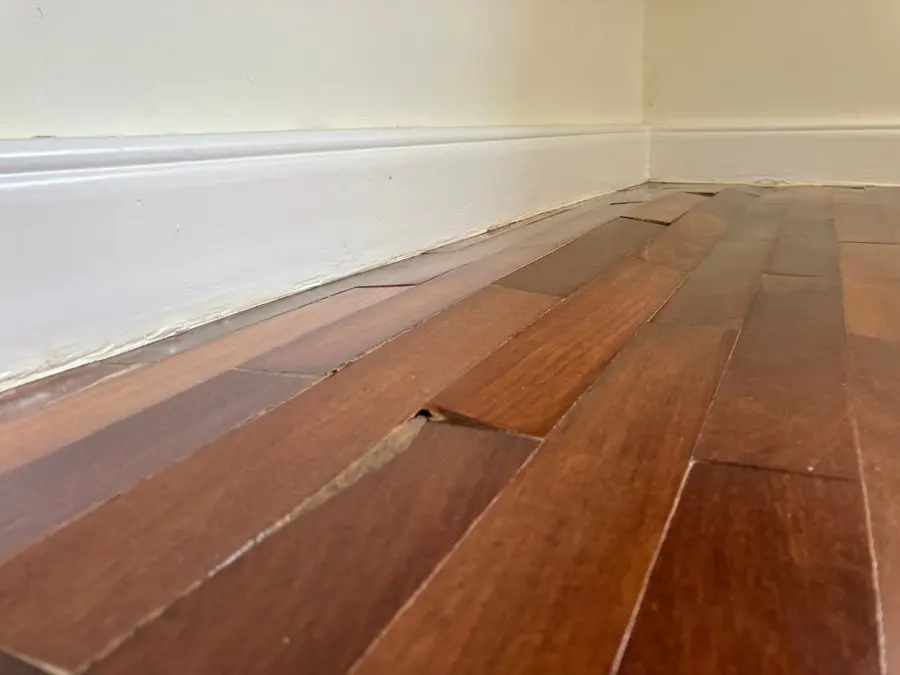
First steps for hardwood floor water damage in Milpitas
- 1Stop the water
Close the fixture valve or the main.
- 2Mop up surface water
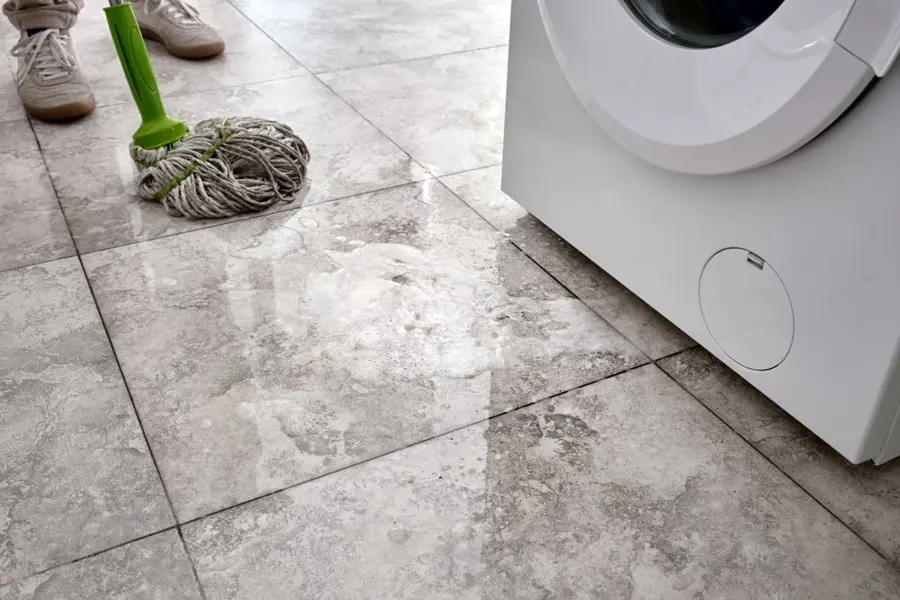
Use towels to get standing water off the boards.
- 3Do not heat the room
Blasting heat can crack and warp wet wood.
- 4Photograph the floor
Record cupping, seams and the water source.
- 5Call early
Wood caught early is far more likely to be saved.
What does hardwood and laminate floor water damage cost in Milpitas, CA?
In Milpitas, CA, hardwood and laminate floor water damage typically runs $1,000 to $14,000 or more, depending on the floor type, the square footage, whether planks must be removed and how quickly drying started.
| Loss size | Typical range | What usually drives it |
|---|---|---|
| One room, hardwood saved | $1,000 to $3,000 | Floor mats, caught early, daily wood readings |
| Several rooms | $3,000 to $7,000 | Planks lifted, slab drying, LGR dehumidifiers |
| Whole floor or upstairs | $7,000 to $14,000+ | Subfloor and ceiling below, removal, extended drying |
Ranges only, never a quote. The category of water, the square footage, the material class and how fast drying started move the number most. The water damage cost calculator gives a closer planning range.
How hardwood floor water damage is handled in Milpitas
- 1
Measure
Wood and slab readings mapped against dry flooring.
- 2
Decide
Save with mats, lift planks or remove, based on readings.
- 3
Dry
Floor mats, air movers and LGR dehumidifiers run together.
- 4
Verify
Daily wood readings until the floor is in its normal range.
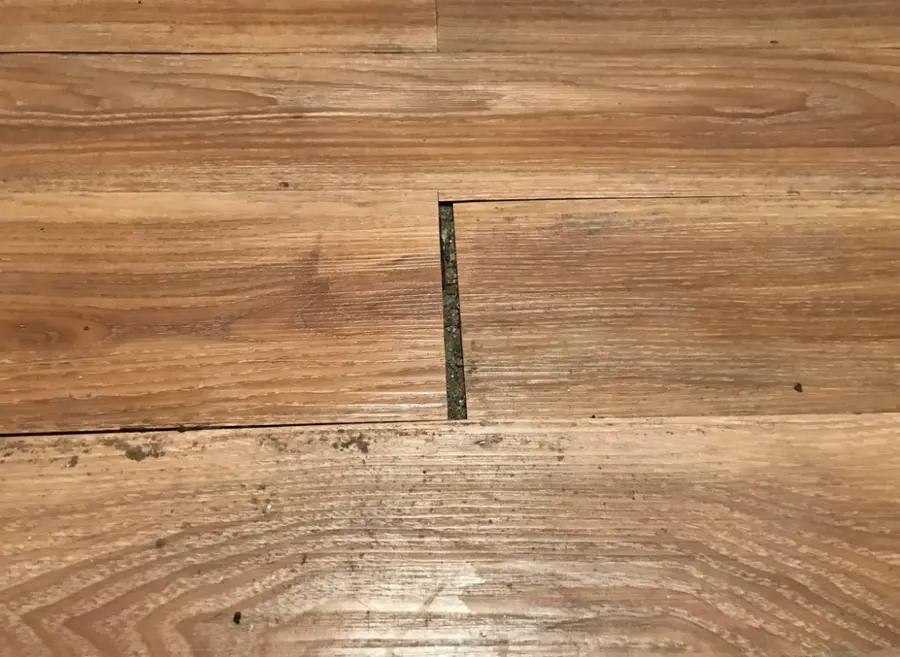
Many Milpitas homes have traded the original carpet for engineered wood, laminate or luxury vinyl plank laid over the concrete slab, and many townhomes have them upstairs over a wood subfloor. Each reacts to water differently. Solid and engineered wood absorb water and cup, with the edges of each board rising. Laminate swells at the seams and rarely recovers. Vinyl plank does not absorb water, but it traps water underneath.
Which floors can be saved
The decision comes from measurements, not appearance. The tech who does the walkthrough takes readings across the floor and compares them to dry wood elsewhere in the home.
- Solid hardwood with mild cupping, caught early: often dried in place with floor mats
- Engineered wood: sometimes saved, depending on the core and how long it was wet
- Laminate: usually replaced once the core swells
- Vinyl plank: lifted so the slab or subfloor underneath can dry, then often reinstalled
- Any floor touched by Category 3 water: removed
How floor mat drying works
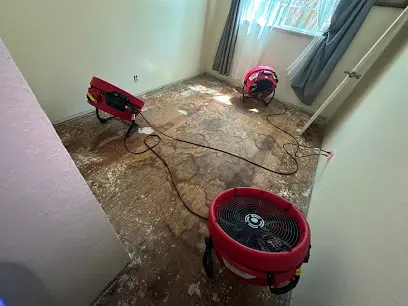
Floor mat systems are panels sealed to the wood surface and connected to a vacuum. They pull moisture up through the boards and out of the gaps while dehumidifiers dry the room air. The drying team pairs the mats with air movers and LGR dehumidifiers and takes daily readings of the wood.
Drying wood too fast can crack it, so the goal is steady drying until the boards are within the normal range for the home. Mild cupping often flattens as the wood dries. Boards that crowned, buckled or separated may need sanding or replacement once the floor is dry.
Over a slab or over a subfloor
On a slab, water under the flooring has nowhere to go, so a plank floor usually has to come up. Upstairs, water can drain into the subfloor and the ceiling below, which then needs drying too. EPA indoor air quality explains why hidden moisture under floors matters, and the California Department of Insurance has help on flooring claims.
Floors over slab versus floors over a subfloor
Glued-down engineered wood on a Milpitas slab behaves differently from nailed hardwood on a wood subfloor upstairs. Glue-down floors can hold water between the slab and the boards, while nailed floors let water drain into the subfloor and the ceiling below.
The drying team takes readings of the wood, the slab or subfloor and the room below before choosing floor mats, lifting planks or removal.
Covering Milpitas, CA and the east foothills
The Milpitas restoration crew handles hardwood floor water damage across ZIP code 95035 and the neighboring South Bay cities, day or night.
Sunnyhills, the Transit Area, Midtown, Summitpointe, the Jacklin Road neighborhoods and McCarthy Ranch, plus North San Jose, Berryessa and Warm Springs next door.
See every neighborhood and ZIP coveredRelated water damage services in Milpitas
Hardwood and Laminate Floor Water Damage questions in Milpitas
Can cupped hardwood go back to flat?
Mild cupping often flattens as the wood dries evenly. Boards that crowned, buckled or split may need sanding or replacement once the floor is dry.
Why does laminate usually get replaced?
Laminate has a fiberboard core that swells at the seams when wet and rarely returns to its original shape.
Can vinyl plank be reinstalled?
Often yes. Vinyl plank does not absorb water, so it can be lifted, the slab dried and the planks put back if they are undamaged.
How long does a wood floor take to dry?
Wood floors often take five to ten days with floor mats, longer than drywall, because the wood must dry slowly and evenly.
Should I run a heater to dry the floor?
No. Fast heat can crack and warp the boards. Controlled drying with dehumidifiers and floor mats works better.
Is floor water damage covered by insurance?
Sudden water damage to floors is often covered after the deductible. Coverage depends on your policy, so it is worth checking with your own insurer.
Hardwood and Laminate Floor Water Damage in Milpitas? Call now.
The restoration team extracts the water, dries the structure to the IICRC S500 goal and records every reading for the claim file.